
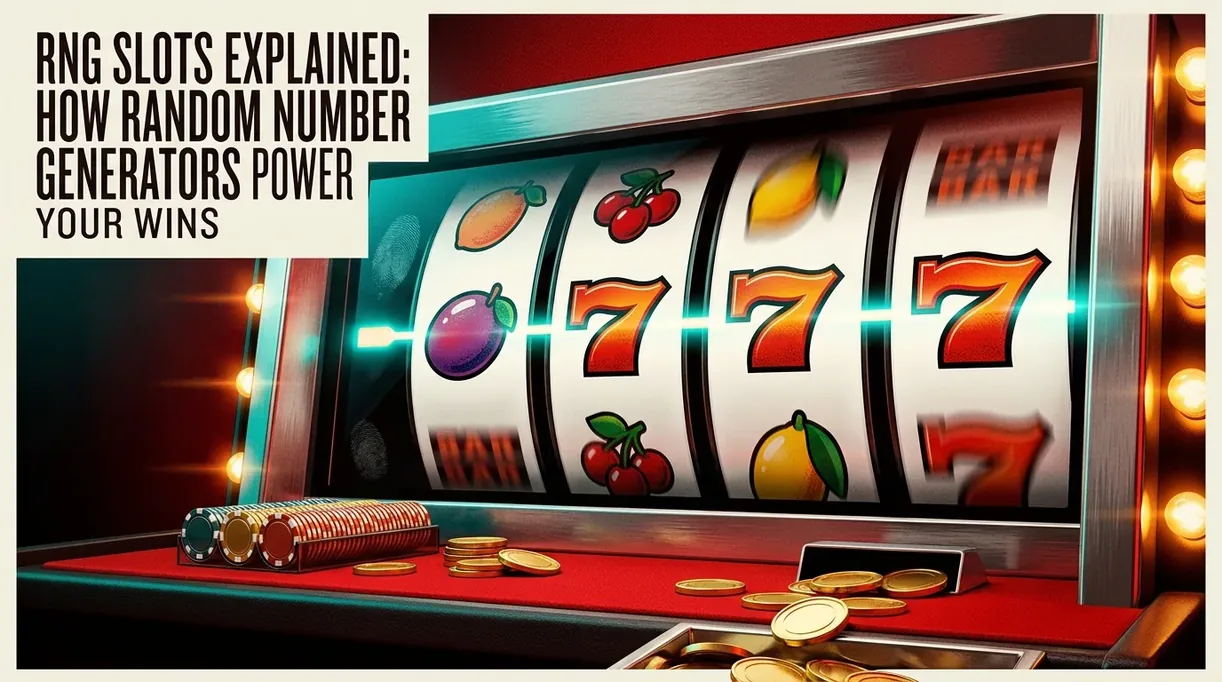
A chip in the slot machine runs a random number generator that continuously produces numbers even when nobody is playing. The algorithm cycles hundreds or thousands of times per second, selecting numbers from 0 to approximately 4 billion. When a player presses the button, the machine selects the outcome using the number generated at that moment, and the outcome is chosen before the reels stop spinning on the screen.
How RNG Core Mechanism Works
A slot machine’s chip runs a number generator. This generator uses an algorithm to pick reel positions when someone presses the spin button. The number generator sets these positions before the spin animation ends.
Generation speed ranges from several thousand to several million random numbers per second. The process uses these principles:
- The chip generates numbers continuously at high speed;
- Number range spans 0 to approximately 4 billion;
- Generation continues when the machine sits idle;
- The result is determined at button press;
- An algorithm uses a mathematical formula;
- RNG process is separate from game display.
PRNG vs TRNG Types
Most slot machines use PRNG to pick outcomes. They do not use TRNG.
A seed value starts the process. PRNG uses algorithms to make number sequences that look random. The algorithm can make billions of combinations before one repeats. Statistical tests show that PRNGs match randomness.
Slot software often uses the Mersenne Twister as its pseudorandom number generator (PRNG), which has a repeat period of 2^19937−1, though some developers use other methods. Games operate using a PRNG, while seeds are set using a true random number generator (TRNG). A TRNG operates more slowly than a PRNG and requires special equipment, which increases costs.
Seed Values and Algorithm Types
Seeding determines where number generation starts in slot RNGs and sets the RNG’s first state. Changing the seed value while the system runs creates different number sequences.
Common slot RNG algorithms use several methods.
- Mersenne Twister – a widely adopted PRNG with a repetition period of 2^19937−1;
- Linear Congruential Generator – a simpler PRNG that creates long sequences through mathematical formulas;
- Proprietary casino algorithms – custom-built systems developed by individual gaming manufacturers;
- Hybrid implementations – combinations that use PRNG for core operation and TRNG for seed generation;
- Nevada-approved cycles – systems running at 70 to 100+ cycles per second to prevent timing exploitation.
How Numbers Map to Virtual Reels
Physical reels display 20 symbols. Virtual reels use the game’s code to configure hundreds of stops. Developers use software to map the random number generator result to stops on the virtual reel. The mapping determines which symbol appears on the screen.
Developers use virtual mapping to control how often each symbol appears without changing the physical reels. They assign more than one number to each stop. Then, they take the RNG output and divide it by the total number of stops, such as 128. A jackpot symbol can appear on 1 out of 128 stops on each of the three reels. So, the chance to land all three jackpot symbols is about 1 in 2.1 million.
Designers set the hit frequency by choosing how often each symbol lands on the strip. When the stops increase from 64 to 256, players find the jackpot harder to hit. The odds change, moving from about 1 in 262,144 to 1 in 16.7 million.
What RTP Percentages Mean
RTP is the percentage of total bets a slot returns to players over many rounds. Most slots have a standard 96% RTP. Many consider an RTP below 95% poor, while an RTP above 97% is often rated as excellent.
A slot with 96% RTP gives the house a 4% edge. When players bet $110,000 and the slot pays $100,000, the RTP is approximately 90.9%.
Online slots have higher RTPs than slot machines in casinos. People track RTP over millions of spins. Online casinos reduce costs, so they can return more to players.
Short-Term vs Long-Term RTP
Session results may differ from the stated RTP. The RTP becomes accurate after millions of spins, but it cannot predict individual session outcomes.
A game with 99% RTP can go through a losing streak. Meanwhile, a game with 94% RTP can pay out a jackpot on the first spin.
RTP shows an average result over a period. It does not promise what a player will get each time. Developers calculate RTP percentages by analyzing outcomes from billions of spins. These numbers do not tell a player what will happen in the next 100 rounds. Each spin is random. The return percentage does not affect the outcome of a round. Players can look at other details, such as hit frequency, bonus frequency, and the size of the win.
Does Volatility Change Your Odds
Volatility shows how often someone wins and how large those wins are. RTP shows the return percentage on all bets over millions of spins.
Slots with the same RTP can have different volatility levels. Higher volatility causes greater variation in payout patterns. Higher-volatility slots provide less frequent wins that pay larger amounts. High volatility does not change the theoretical return.
RTP and volatility are independent variables in slot design. A game can have any combination of RTP and volatility levels. Higher-volatility slots provide less frequent wins that pay larger amounts, while lower-volatility slots offer smaller wins more frequently. Over millions of spins, the amount players win matches the stated RTP.
Hit Frequency Explained
Hit frequency tells how often a player gets a win from a spin. This number shows the percentage of spins that pay out. Developers calculate this value by finding the odds of hitting a symbol combination.
These factors set the frequency of hits.
- Virtual stop assignments;
- Symbol weighting on reels;
- Jackpot spacing;
- Blank positions;
- Near-miss programming.
RNG Testing and Certification Process
A slot game must pass testing before it can be launched. Testing is conducted by laboratories such as eCOGRA, GLI, BMM Testlabs, and iTech Labs. Laboratory staff check random number generator integrity and return-to-player accuracy. They review the algorithm and run tests to ensure the random number generator produces results that comply with regulatory rules.
Labs run millions of simulated rounds. With this process, staff check if payouts match the published figures. Certification happens more than once.
Some agencies publish monthly payout reports showing how games perform under real-world conditions. Periodic audits help ensure consistent performance, and tests verify that the algorithm has not been altered. This transparency gives players confidence that outcomes remain random and fair in every session.
Statistical Test Suites and Labs
Labs use statistical tests including NIST SP 800-22, chi-square, and proprietary test sets. They apply these tests to samples containing 10 million to 1 billion simulated outcomes. The tests assess whether every number sequence is random and evenly distributed. Labs seek to verify that each number appears as often as expected and that result sets contain no detectable repeating patterns.
Auditors check number generation and RTP. Certification standards assess unpredictability and independence. Testers ensure developers use the RNG in the game software.
On the supplier side, teams test whether the product meets developer specifications. Vendors also run their own tests. They check that the casino has not changed the product. Testing at both stages prevents tampering.